
Redfood24 Blog - CBD & Food Supplements
Blog article:
Turmeric: More than just a spice plant

Turmeric is on everyone's lips, literally and figuratively. The bright yellow root has established itself not only in the culinary world but also in the health industry. In this post, we'll delve deeper into the world of turmeric and its health benefits.
What is turmeric and why is it so popular?
Turmeric, also known as turmeric root or Indian saffron, is a spice plant whose roots are powdered and used as a spice. But turmeric is not only popular in the kitchen. The yellow root contains an active ingredient called curcumin, which has antioxidant and anti-inflammatory properties.
The turmeric plant, scientifically known as Curcuma longa, is a perennial herb that belongs to the ginger family (Zingiberaceae). It is native to South Asia and is mainly found in countries such as India, Indonesia and China. The plant has been used for culinary and medicinal purposes for centuries and has gained popularity worldwide due to its diverse applications.
Turmeric and Health: Antioxidant and Anti-Inflammatory Effects
The antioxidant and anti-inflammatory properties of turmeric are arguably the main reasons for the growing popularity of this plant as a medicinal remedy. Numerous studies suggest that turmeric can help protect the body from free radicals and reduce inflammation in the body. This could potentially have positive effects on various health conditions.
Turmeric Effects: A Look at the Versatility of Turmeric
Turmeric, the vibrant yellow root, has established itself as a true superfood plant in recent years. But what exactly makes turmeric so special? In this article, we take a closer look at the versatile effects of this fascinating plant.
Antioxidant Power of Turmeric
The antioxidant effect of turmeric is probably one of the most impressive properties of this plant. The antioxidant contained in turmeric active ingredient curcumin is a powerful antioxidant that can help protect the body from the damaging effects of free radicals. These molecules can damage cells and are linked to various diseases as well as the aging process.
Anti-inflammatory properties
Another notable effect of turmeric is its ability to inhibit inflammation. Numerous studies have shown that curcumin can reduce inflammatory processes in the body. This could be particularly beneficial for people with inflammatory diseases such as arthritis. The anti-inflammatory effect is also valued for positive effects on general health and well-being.
support for digestion
Turmeric has been traditionally used as a digestive aid in various cultures. The root stimulates the production of digestive enzymes and can thus aid digestion. Some people swear by a cup of warm turmeric tea after a meal to reduce bloating and aid digestion.
Potential contribution to weight regulation
There is some evidence that turmeric may also play a role in weight management. Some studies suggest that curcumin may boost metabolism and inhibit the formation of fat cells, making turmeric an interesting companion for people who want to achieve or maintain their weight goals.
Possible positive effects on brain function
The effects of turmeric even extend to the brain. There is evidence that curcumin can stimulate the production of growth factors in the brain, which could potentially prevent neurological diseases such as Alzheimer's. The anti-inflammatory properties could also help manage stress and depression.
Turmeric as a remedy: The natural power of turmeric
Turmeric, also known as Golden Spice Known in Ayurvedic medicine, turmeric has been proven to be a medicinal remedy for centuries. The yellow root, whose main ingredient is curcumin, is not only valued in cooking, but is also used as a traditional remedy in various cultures. In this article, we take a closer look at why turmeric is so popular as a medicinal remedy.
Traditional use in Ayurvedic medicine
The use of turmeric as a medicinal remedy dates back to ancient Ayurvedic medicine. In this holistic healing art, turmeric is valued for its many health benefits. It is believed that turmeric can balance the three doshas (vata, pitta, kapha) and thus promote overall well-being.
Anti-inflammatory properties for joints and muscles
Turmeric is often used as a natural anti-inflammatory agent. People with joint problems such as arthritis in particular can benefit from turmeric's anti-inflammatory properties. Regular consumption can help reduce pain and improve mobility.
Stomach-friendly effect and digestive support
Ayurvedic medicine also recommends turmeric for stomach problems and to aid digestion. The root stimulates the production of digestive enzymes and can thus help reduce digestive problems such as bloating and flatulence. A tea with turmeric after a meal is often perceived as soothing for the stomach.
strengthening the immune system through antioxidants
The antioxidant properties of turmeric make it a valuable aid in strengthening the immune system. The antioxidants contained in turmeric can help protect the body from diseases and infections. Turmeric is particularly valued as a supportive remedy in times of flu and colds.
skin care with turmeric
Turmeric can be used as a remedy not only internally but also externally. Its antimicrobial properties can help with skin problems such as acne. The use of a turmeric mask can soothe the skin, reduce blemishes and promote a radiant complexion.
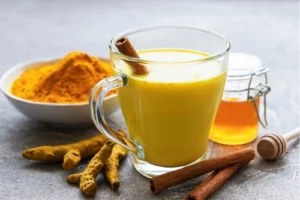
turmeric latte
The healing power of turmeric: Which diseases can turmeric help with?
Buying Turmeric: A Guide to Buying Turmeric Wisely
Buy turmeric may seem simple at first glance, but given the variety of products on the market, it is important to make a conscious decision to buy a high-quality product. In this article, we will look at what is important when buying turmeric and how to ensure that you get the best qualities of turmeric.
Organic quality as a benchmark
When buying turmeric, you should opt for organic quality if possible. Organic turmeric is grown without the use of pesticides or chemical fertilizers and therefore contains no residues of harmful substances. This is particularly important because turmeric is used not only as a spice but also as a medicinal product.
origin and cultivation
The origin of turmeric plays a crucial role in its quality. The root is originally from South Asia, and regions such as India are considered leading turmeric growing areas. Products that come from trusted sources and provide transparent information about their origin are usually more reliable.
Powder or roots?
When buying turmeric, there are often two main forms to choose from: turmeric powder and fresh turmeric roots. Both have their benefits, and the choice depends on personal preference and intended use. Powder works well as a spice and for making drinks, while fresh roots are ideal for fresh juices or as an ingredient in dishes.
Pay attention to the curcumin content
The active ingredient curcumin is responsible for many of the health benefits of turmeric. When buying turmeric, it is advisable to pay attention to the curcumin content. A higher content often means a stronger effect. Some products, such as Turmeric capsules, are specifically designed to provide concentrated curcumin content.
comparison of product reviews
Looking at the experiences of other buyers can also be helpful. Product reviews and testimonials provide insight into the quality and effectiveness of the turmeric product you choose. However, keep in mind that personal reactions to supplements can vary.
Turmeric Capsules: The Concentrated Power of Turmeric for Health
Turmeric is no longer just a spice in the kitchen, but has also found its way into the form of dietary supplements. Turmeric capsules are a popular and practical way to integrate the many health benefits of turmeric into everyday life. In this article, we take a detailed look at turmeric capsules and their potential effects.
Compact and practical
Turmeric capsules offer a compact and practical way to consume the active ingredients of turmeric in precisely measured amounts. Unlike powders or fresh turmeric, the capsules are easy to take, can be taken anywhere and do not have a strong taste of their own.
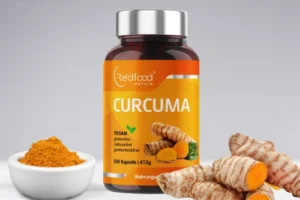 Curcuma 500 capsules – Curcumin + Piperine
Highly concentrated curcumin intake
The main active ingredient in turmeric, curcumin, is often contained in highly concentrated form in turmeric capsules. This allows a targeted supply of curcumin without having to integrate large amounts of turmeric into the daily diet. For people who want to benefit from the specific health advantages of curcumin, capsules can be an effective solution.
Anti-inflammatory support
The anti-inflammatory properties of turmeric, especially the curcumin it contains, are well documented. Turmeric capsules can therefore provide effective support for inflammation in the body. This is particularly relevant for people with joint problems or inflammatory diseases.
stomach-friendly alternative
While some people may have difficulty tolerating larger amounts of turmeric in their diet, turmeric capsules are often easier on the stomach. The capsules may appeal to those who are sensitive to certain spices or have difficulty absorbing turmeric in food form.
Suitable for people with limited time
In our busy world, maintaining a balanced diet on a daily basis can be challenging. Turmeric capsules offer a convenient option for people with busy schedules who still want to reap the health benefits of turmeric.
Quality counts
When choosing turmeric capsules, it is important to pay attention to the quality of the product. Organic turmeric and capsules with high purity are recommended to ensure that the health benefits can be enjoyed to their full extent.
Conclusion
Turmeric, especially the active ingredient curcumin, offers an impressive range of health benefits. From fighting inflammation to supporting digestion to possible effects on the brain - the effects of turmeric are diverse. Whether as a spice in the kitchen, as a dietary supplement or in another form: regularly integrating turmeric into your diet can be a small but effective step towards a healthy lifestyle.